Seville reveals itself above all through the senses: the scent of orange blossom filling the streets in March, the click of heels on the cobblestones of a Santa Cruz lane, the golden light settling on azulejos at sunset. Capital of Andalusia, the city concentrates eight centuries of Moorish and Christian history in a historic centre that can be explored entirely on foot.
The Alcazar, a living palace of the kings of Castile
Unlike Granada's Alhambra, frozen in its status as a monument, Seville's Real Alcázar remains an official royal residence, still used by the Spanish royal family during their stays in the city. Built by Mudéjar craftsmen for Christian kings, the palace layers styles with rare elegance: multi-lobed arches, gilded coffered ceilings, and terraced gardens where fountains punctuate the stroll. Booking a time slot in advance remains essential, as demand never really slows.
Santa Cruz, the maze of the old Jewish quarter
A stone's throw from the cathedral, the former Jewish quarter of Santa Cruz unfolds a labyrinth of whitewashed lanes, flower-filled patios and shaded squares. This is where Seville is at its most photogenic, but also at its liveliest outside peak tourist hours: early morning or late afternoon, residents reclaim the terraces and benches shaded by orange trees.
Triana and the soul of flamenco
Across the Guadalquivir, the Triana district has produced many great names in flamenco and Andalusian ceramics. Far from the tourist-calibrated shows of the city centre, a few more discreet tablaos still host evenings where cante jondo, flamenco's deepest form of singing, is performed with rare intensity. Triana's covered market, rebuilt on the remains of an old castle, rounds off the visit with a food stop.
Plaza de España, staging and spectacle
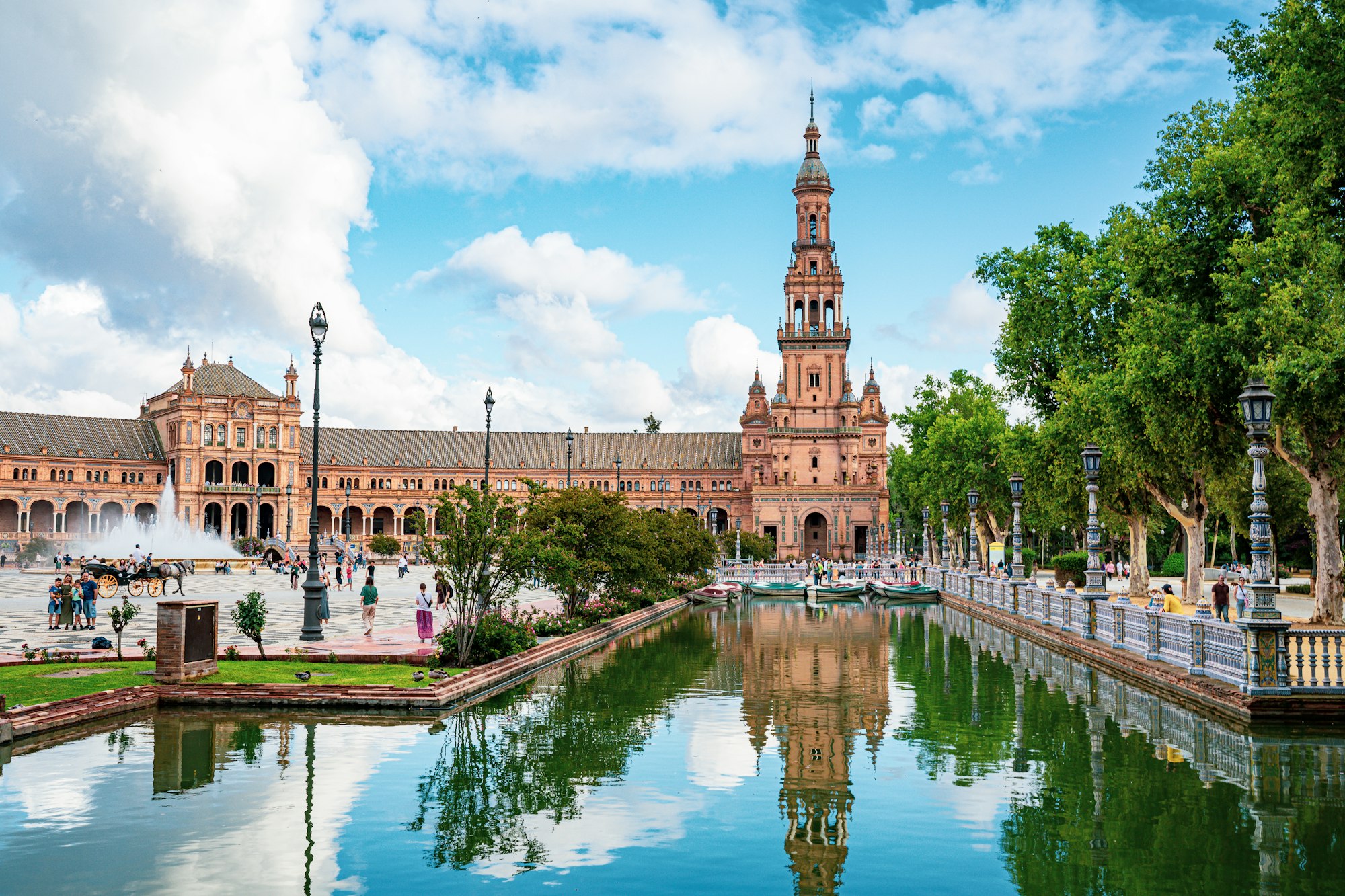
Designed for the 1929 Ibero-American Exposition, the Plaza de España impresses with its sheer scale: a brick and ceramic semicircle bordered by a canal, where each Spanish province is represented by a niche decorated with azulejos. The place lends itself to a quiet stroll early in the morning, before the tour groups arrive.
Where to stay in Seville
The Santa Cruz district offers the most charming setting for a stay, within walking distance of the Alcazar and the cathedral. For a more laid-back stay, addresses on the Triana side allow you to experience a more local Seville, just a few minutes' walk from the historic centre.
When to go
March marks one of the best times to visit Seville: temperatures remain mild, orange trees bloom throughout the city, and crowds have not yet reached their peak of Holy Week and the April Fair.

Passionate about travel and urban discoveries, I create guides to help travelers organize their getaways in the most beautiful cities in Europe and elsewhere. Through City Travelers, I share itineraries, practical tips and tour ideas to take full advantage of each destination, for a weekend or a longer stay.