Montmartre suffers from a contradictory reputation: universally adored for its charm as a hilltop village, and just as universally denounced for the tourist density of its most famous lanes. Right in the middle of summer, when part of Paris's population has deserted the capital, the Butte regains a rhythm closer to the one that seduced so many painters.
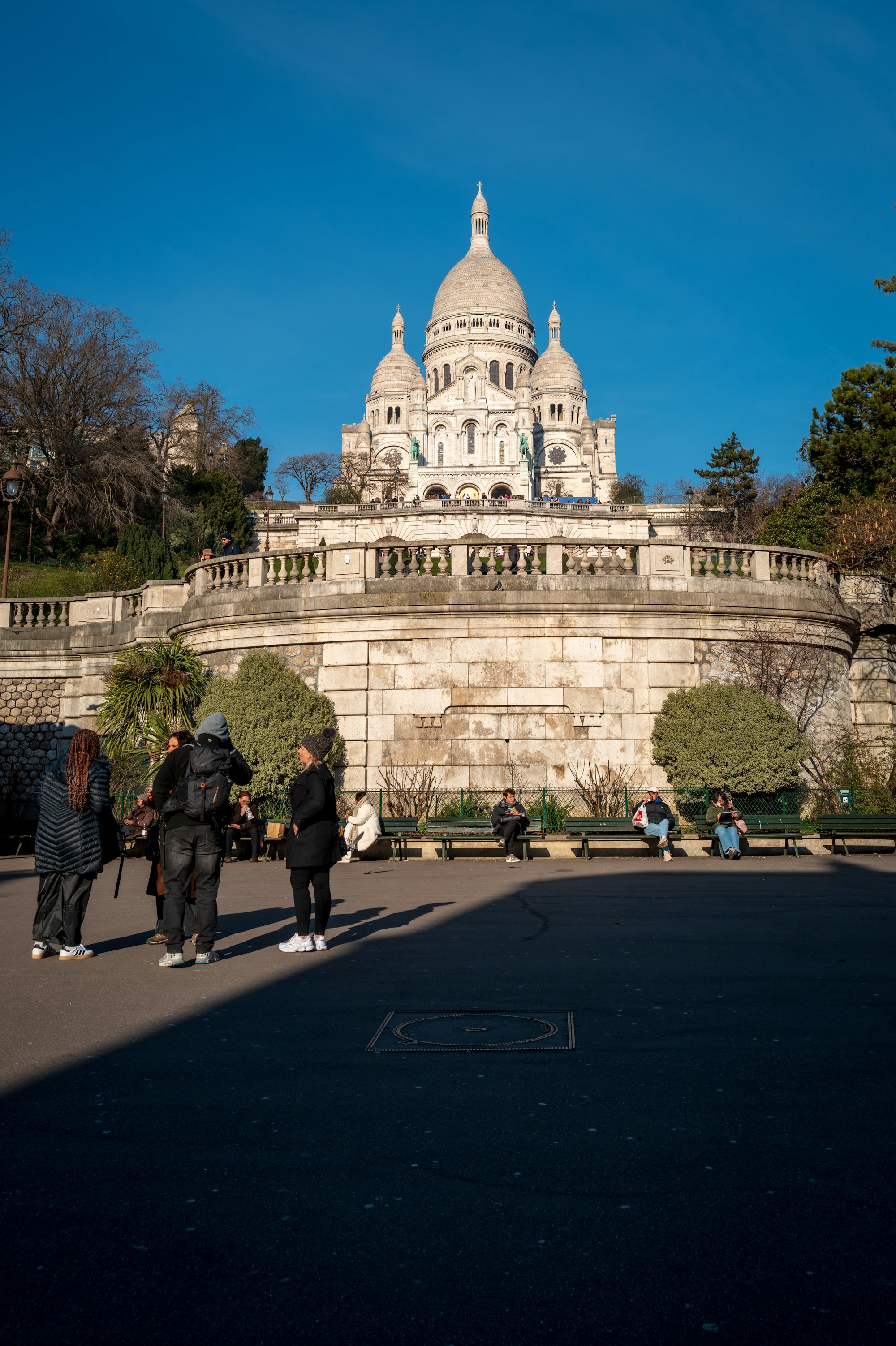
The basilica and its forecourt, very early in the morning
The Sacré-Cœur remains the obligatory stop on any visit to Montmartre, but its forecourt changes completely depending on the hour. Arriving before nine in the morning lets you enjoy the view over Paris from the steps without the density of groups that invade the spot from midday onward, and to appreciate the low morning light on the white dome.
Place du Tertre, better to go around it
Place du Tertre, with its resident painters, concentrates most of the district's tourist crowds. The surrounding lanes, such as Rue de l'Abreuvoir or Rue Saint-Rustique, offer an experience much closer to the image one has of old Montmartre: cobblestones, urban vines, flower-covered façades, without the density of the neighbouring square.
The Montmartre of artists, still alive
Beyond the cliché, Montmartre retains a genuine artistic memory: the Bateau-Lavoir, where Picasso painted the Demoiselles d'Avignon, the pink house immortalised by Utrillo, or the Musée de Montmartre, housed in the former studio of Renoir and Suzanne Valadon. These sites, often overlooked in favour of selfies in front of the Sacré-Cœur, help explain why so many artists settled here at the turn of the 20th century.
The Montmartre vineyard and October's harvest
On the hill's northern slope, the Montmartre vineyard, one of the capital's last urban vineyards, is a reminder that the Butte was long covered in windmills and crops before becoming a Parisian district. Its grape harvest, organised each autumn in a village-fair atmosphere right in the middle of Paris, remains one of the district's most endearing events.
Where to stay in Montmartre
Staying directly on the Butte lets you enjoy the district very early in the morning and late at night, once the tour buses have left. Addresses around Rue Lepic or Rue des Abbesses offer a good compromise between village charm and practical access to the rest of Paris via the metro.
When to go
August remains, paradoxically, one of the calmest months for exploring Montmartre in depth, as group tourism tends to concentrate more in spring and early autumn.

Passionate about travel and urban discoveries, I create guides to help travelers organize their getaways in the most beautiful cities in Europe and elsewhere. Through City Travelers, I share itineraries, practical tips and tour ideas to take full advantage of each destination, for a weekend or a longer stay.