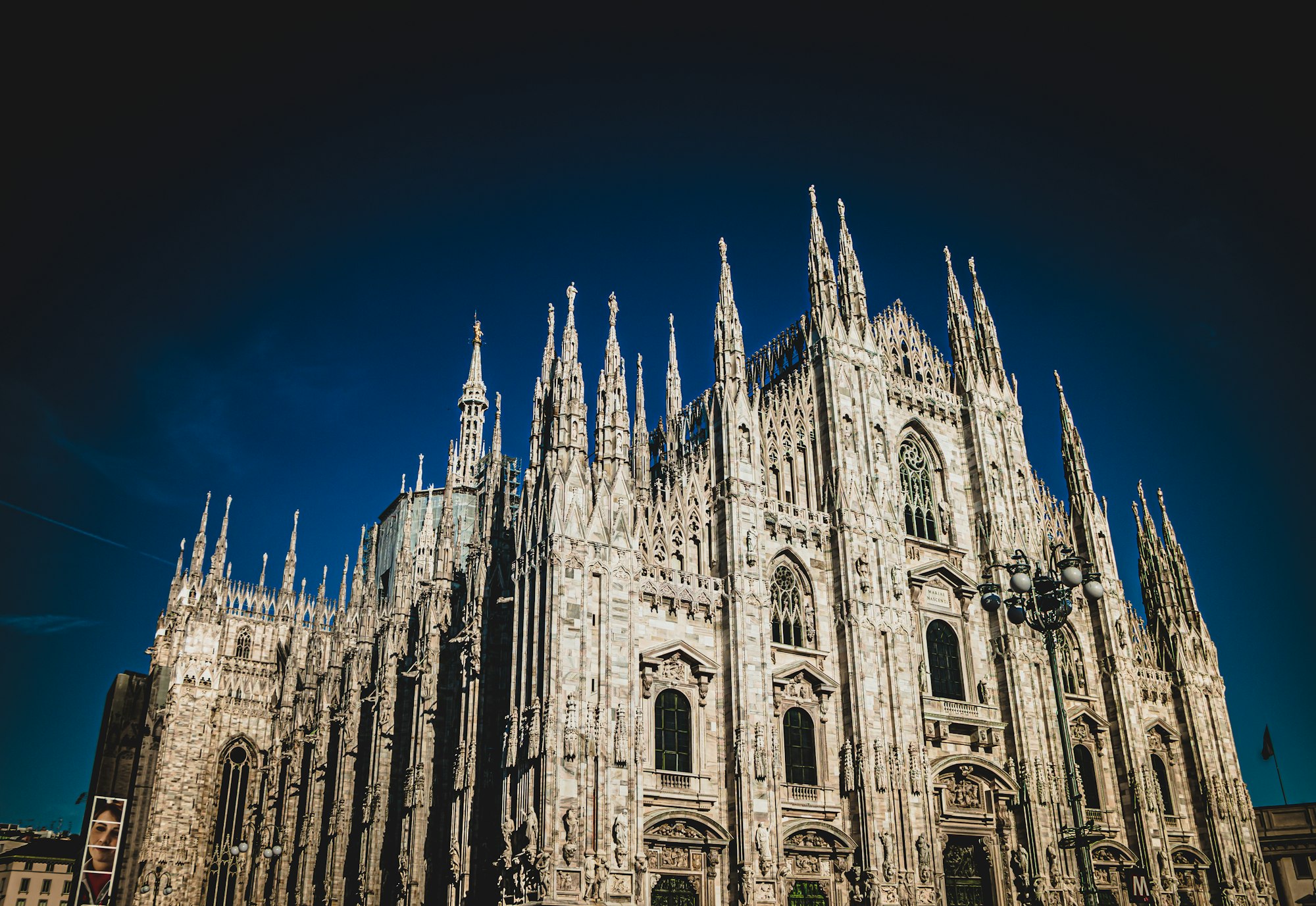
Milan doesn't try to impress at first sight. Unlike Rome or Florence, the city doesn't live off an ancient or Renaissance past, but off a more contemporary identity, built around fashion, design, and a demanding yet understated cultural life. It's a destination that rewards those who take the time to understand it, often on the occasion of an extended business trip.
La Scala, opera as everyday life
The Teatro alla Scala isn't just a monument: it's a living stage, with a dense year-round programme of opera, ballet and symphonic concerts. Even without attending a performance, the adjoining museum reveals the central place opera holds in Milanese cultural identity, inherited from the 19th-century Verdi era.
Brera, the artists' quarter
Around the Pinacoteca di Brera, the surrounding district has kept the atmosphere of an art school, with its cobbled lanes, independent galleries and cafes that art students have frequented for generations. The gallery itself holds masterpieces from Mantegna to Caravaggio, in a setting far less crowded than Rome's or Florence's major museums.
The Triennale and Milanese design
Milan is the world capital of design, and the Triennale, set in the Parco Sempione, is its institutional showcase. Temporary exhibitions, interior architecture, contemporary furniture: the venue traces the history of a city that shaped postwar European domestic aesthetics, from Gio Ponti's furniture to the most recent creations.
Milan for bleisure business travellers
Milan lends itself particularly well to extending a professional trip culturally: the main cultural venues cluster within a small radius around the historic centre, making it easy to slip in a museum visit or an evening at the opera between two meetings, without sacrificing a full day.
Where to stay in Milan, between business and culture
A hotel in the Brera district or near La Scala offers walking access to both the central business district and the main cultural venues, ideal for combining professional efficiency with cultural immersion.

Passionate about travel and urban discoveries, I create guides to help travelers organize their getaways in the most beautiful cities in Europe and elsewhere. Through City Travelers, I share itineraries, practical tips and tour ideas to take full advantage of each destination, for a weekend or a longer stay.