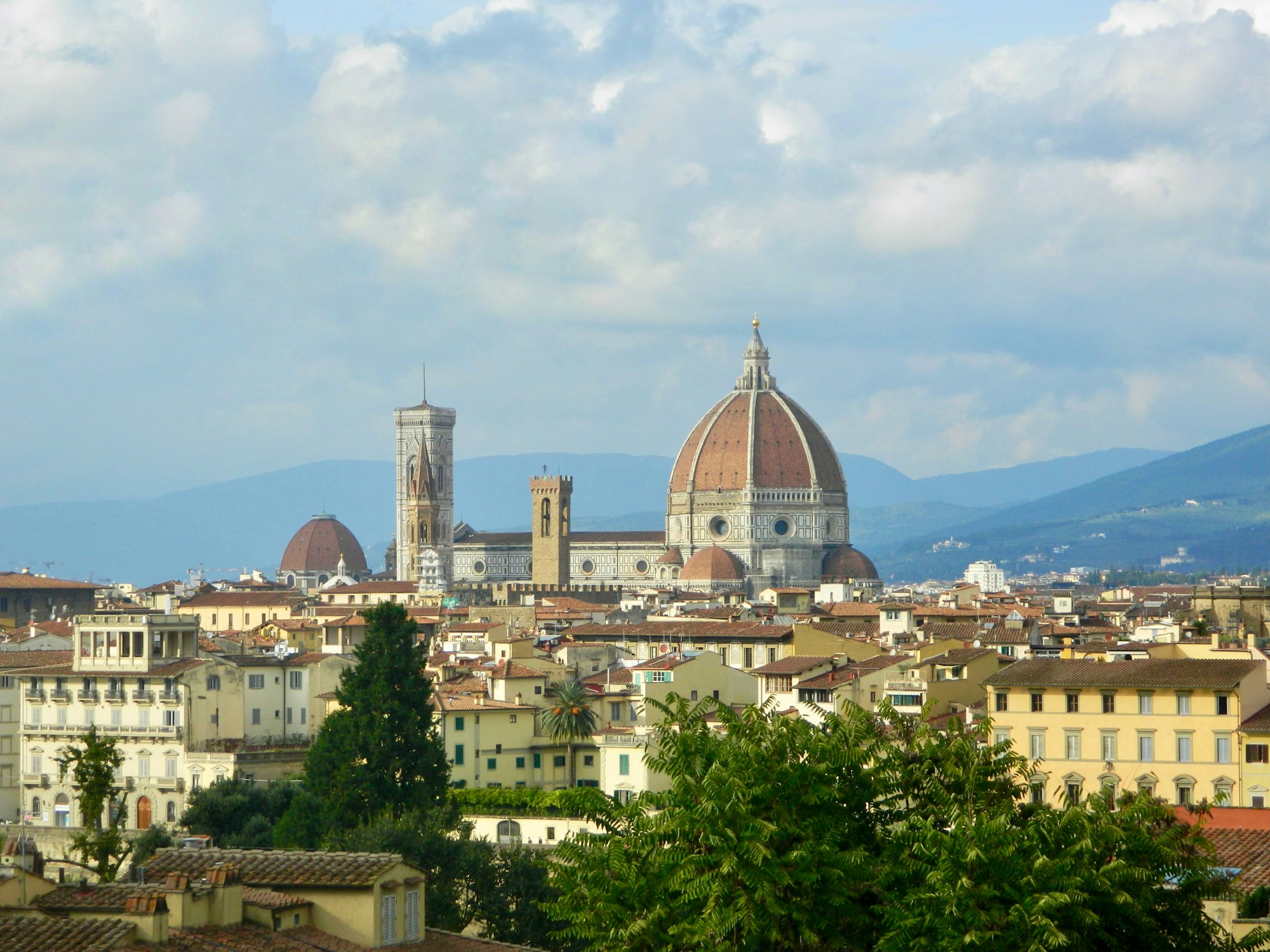
Florence isn't visited, it's deciphered. Every façade, every courtyard, every bridge tells a precise moment of the artistic explosion that changed the way the West sees. In three days, no one pretends to see it all: instead, you choose to understand how this city functioned as an immense workshop, where painters, sculptors and goldsmiths worked streets apart from one another, under the watchful eye of the Medici.
The Uffizi, the Renaissance's living memory
The Uffizi Gallery isn't just a collection: it's the story of Florentine patronage told room by room. Botticelli, Leonardo and Michelangelo answer one another in a dialogue built across several generations. To grasp its coherence without the fatigue, it's best to book an early morning slot and focus on two or three rooms rather than chase every masterpiece.
The Duomo and the Florentine skyline
Brunelleschi's dome still dominates the city, six centuries after it was built, as much a feat of engineering as of faith. Climbing to its top reveals the layout of Medici-era Florence at a glance: the Baptistery, Giotto's bell tower, and in the distance the Tuscan hills that fed the imagination of so many painters.
In the artisans' workshops, the Renaissance continues
What few visitors know is that some Renaissance gestures never stopped. In the lanes around Santa Croce, bookbinders, goldsmiths and painting restorers still work by centuries-old methods. Pushing open the door of one of these workshops, often open to the curious public, offers another way to understand the city: not as a museum, but as a living craft.
Oltrarno, the other bank
Across the Arno, the Oltrarno district still largely escapes the crowds of the historic centre. Wander between the Pitti Palace, the Boboli Gardens and small squares where Florentines themselves come for an aperitivo. Here, the city finds a more everyday rhythm, far from the density of the Ponte Vecchio.
Where to stay in Florence to live at the city's pace
Choose an address on the Oltrarno side for a more intimate stay, with views over terracotta rooftops and quick access to the historic centre on foot. For a more classic stay, addresses around Santa Maria Novella make it easy to head to the Uffizi and the Duomo first thing in the morning.
How long to stay, when to go
Three full days cover the essentials without rushing. Spring and early autumn offer the best light for walks in the surrounding hills, while the quieter winter suits those who prefer to focus on the museums.

Passionate about travel and urban discoveries, I create guides to help travelers organize their getaways in the most beautiful cities in Europe and elsewhere. Through City Travelers, I share itineraries, practical tips and tour ideas to take full advantage of each destination, for a weekend or a longer stay.